Grand Hotel Viena in Miramar
31.01.2022: https://www.argentinien24-7.com/gran-hotel-viena-miramar/
Gran Hotel Viena in Miramar – Prunk in Ruinen
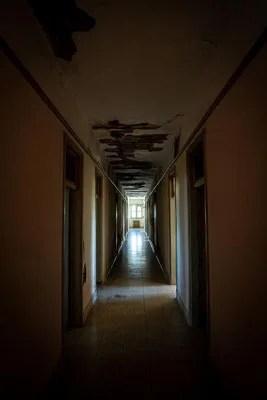
Das Gran Hotel Viena in Miramar de Ansenuza, Provinz Córdoba, war in der ersten Hälfte des 20. Jahrhunderts ein luxuriöses Feriendomizil für gut betuchte Europäer und Argentinier. Vom ehemaligen Prunk und Gloria erzählt heute nur das leise Flüstern der Geister – sofern man an deren Existenz glaubt. So oder so, die alten Gemäuer, knarzenden Treppenstufen und Schatten werfende Gänge sind einen Besuch auf jeden Fall Wert.
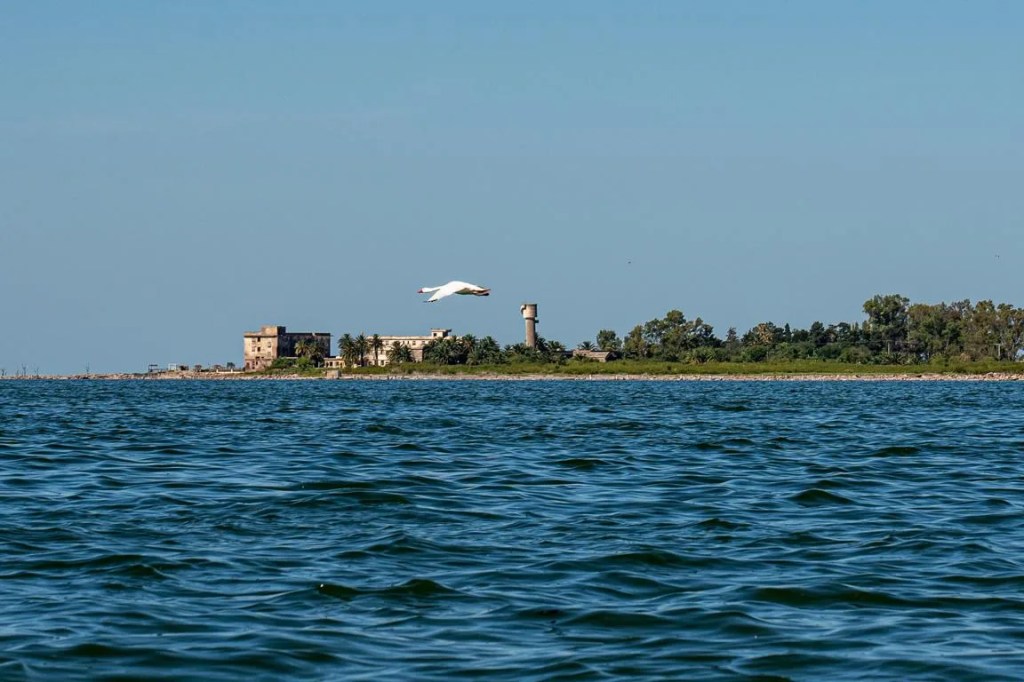
Zweieinhalb Autostunden von Córdoba Stadt entfernt liegt der kleine Ort Miramar de Ansenuza am Salzsee „Mar Chiquita“. Neben einem entspannenden Bad im salzigen Wasser oder der Vogelbeobachtung – allein 300.000 Flamingos leben dort – empfängt Miramar die Besucher mit Geschichten. Eine dieser Geschichten ist die des Gran Hotel Viena.
Miramar de Ansenzua – einstiger Kurort für Gutbetuchte
Aufgrund des hohen Salzgehaltes und einer Vielzahl von Mineralien entwickelte sich Miramar Anfang des 20. Jahrhunderts zu einem vielbesuchten Kurort. Die Gäste kamen aus ganz Argentinien und Europa, in der Hoffnung hier ihre Krankheiten zu heilen. Lange Schiff- und strapaziöse Überlandfahrten nahm man dafür gerne in Kauf. In seiner Blütezeit durfte sich Miramar mit 109 Hotels rühmen, aber keines war so luxuriös und prunkvoll wie das Gran Hotel Viena, wo dem Gast jeder Wunsch von den Augen abgelesen wurde.
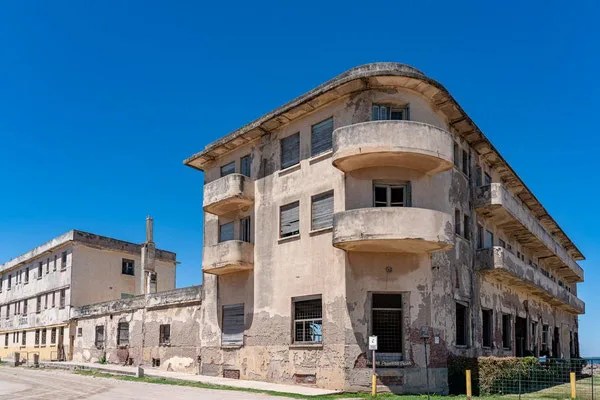
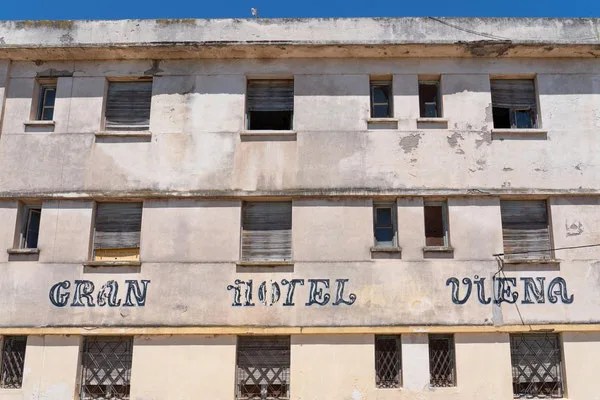
Gran Hotel Viena in Miramar: Reise in die Vergangenheit
Der Deutsche Max Pahlke, damaliger Generaldirektor der Firma Mannesmann für Südamerika, lebte seit 1920 mit seiner österreichischen Frau Melitta in Argentinien. Sie litt an einer Hautkrankheit, ihr Sohn an Asthma, und so reisten sie auf Empfehlung ihres Arztes in Buenos Aires nach Miramar. Tatsächlich fühlten sich Mutter und Sohn bald besser, was die Familie dazu bewegte, im Jahr 1936 Geld in die Errichtung eines Luxushotels zu investieren.
1940 wurde mit dem Bau begonnen und vier Jahre später öffnete das Gran Hotel Viena seine Tore für Besucher aus aller Welt, vorwiegend aber aus dem deutschsprachigen Raum. Voraussetzung für die 80 Angestellten war es, möglichst akzentfrei Deutsch zu sprechen.
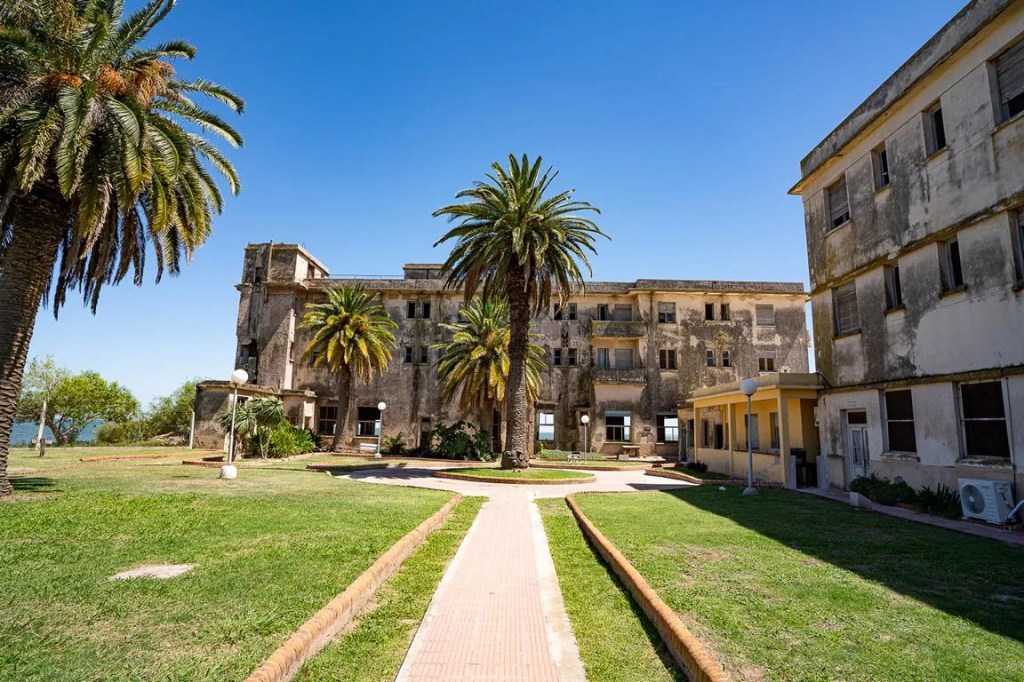
Die Zimmer des Gran Hotel Viena
Das Hotel bestand aus drei Flügeln. Der Nordflügel hatte 26 Zimmer mit je 2 Betten und 2 Zimmer mit drei Betten. Alle Zimmer waren ausgestattet mit eigenem Bad, Heißwasser, Betten und einem Schrank. Auf jeder Etage gab es ein Telefon, über das mit den Angestellten kommuniziert werden konnte. Der Ostflügel war für Alleinreisende gedacht und verfügte über 30 Zimmer mit eigenem Bad. Der dritte Flügel war der deutschsprachigen Oberschicht vorbehalten. Hier gab es acht Maisonette-Wohnungen sowie acht großzügig eingerichtete Doppelzimmer, wahlweise mit Seeblick oder mit Blick auf den mit Blumen und Palmen bepflanzten Innenhof.

Marmor, Aufzüge & Klimaanlagen – Luxus pur
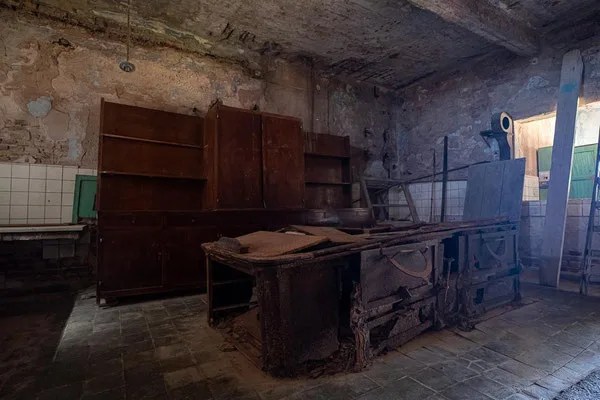
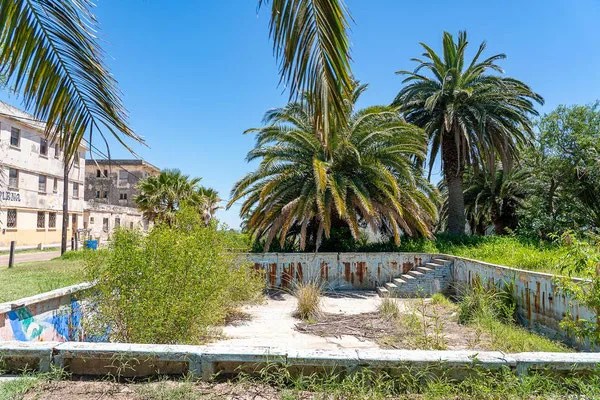
Der Marmor für Zimmer und Flure im First-Class-Trakt wurde eigens aus Italien hergebracht. Der große Speisesaal hatte eine große Fensterfront zum See hin, schwere Kronleuchter hingen von der Decke. Außerdem verfügte das Hotel über ein Thermalbad mit Salzwasser, eine eigene Bäckerei, Friseursalon, diverse Werkstätten, Ärzte & Krankenschwestern, Zentralheizung, Aufzüge und – absolutes Luxusgut zur damaligen Zeit – eine Klimaanlage. Man stelle sich diesen ganzen Prunk nun in einem 1600 Seelennest vor.
Gran Hotel Viena – das Ende von Glanz & Gloria
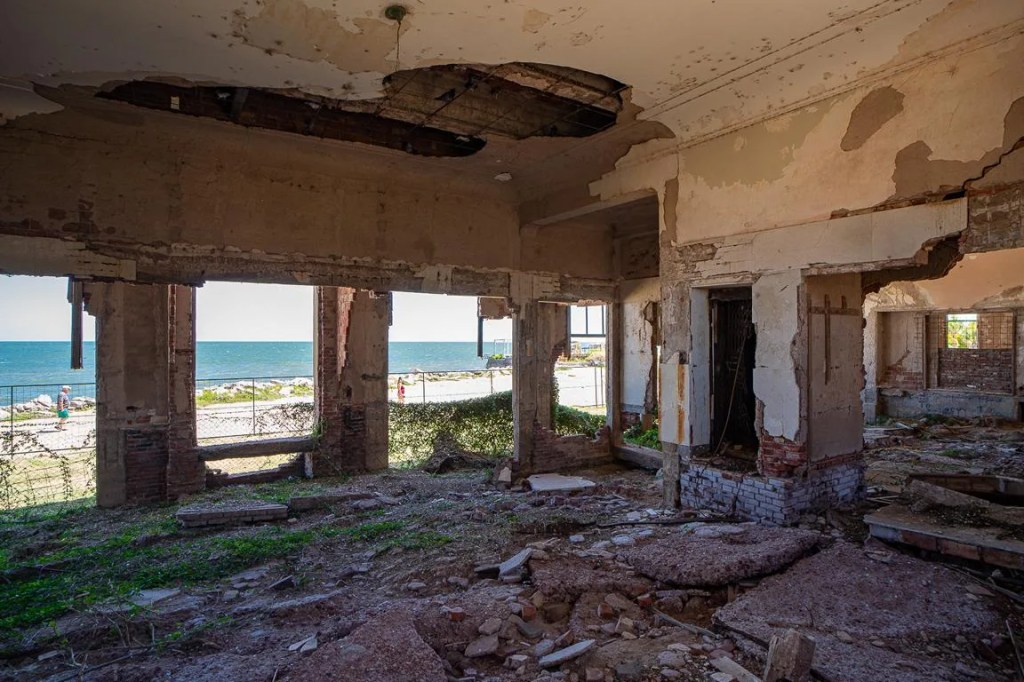
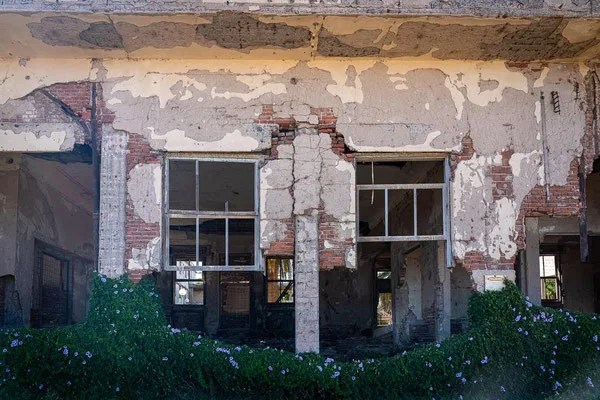
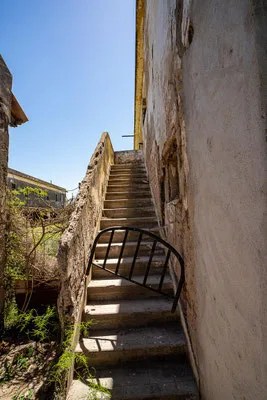
Lange hielt das luxuriöse Leben allerdings nicht an. Denn 1946, nur zwei Jahre nach der Eröffnung, verließen die Pahlkes Argentinien, das Gran Hotel Viena wurde geschlossen. Generaldirektor Martin Krüger blieb, wurde aber zwei Jahre später tot in seinem Zimmer aufgefunden. Anfang der 1960er Jahre eröffnete das Hotel erneut, fiel allerdings der großen Überschwemmung von 1977 endgültig zum Opfer. Jahrelang war das Gebäude gefangen im Salzwasser. Das Salz fraß sich gierig durch die Mauern. Übriggeblieben ist eine Ruine, die heute als Museum fungiert.
Streit um das Grundstück
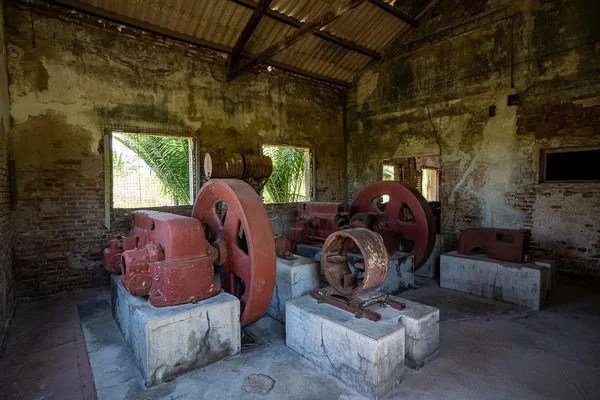
Einige original Maschinen und Einrichtungsgegenstände sind bis heute erhalten und können im Rahmen einer geführten Tour besichtigt werden. Alle Luxusartikel, die zu Geld gemacht werden konnten, wurden jedoch nach der Überschwemmung geplündert. Das Grundstück ist seit einigen Jahren Gegenstand einer juristischen Auseinandersetzung zwischen der Stadtverwaltung von Miramar und einem Nachkommen Pahlkes, der es als sein Erbe betrachtet. Eine heikle Situation, deren Ausgang in den Sternen steht.
Gran Hotel Viena – Ort der Geschichten
Das ruinöse Gebäude entlockt der menschlichen Fantasie die absurdesten Theorien. Nazis hätten dort nach dem Zweiten Weltkrieg Unterschlupf gefunden, Soldaten wären dort gesund gepflegt worden, ja, manche Stimmen in Miramar sind sogar überzeugt davon, dass sich dort der ehemalige Präsident Juan D. Perón mit Hitler getroffen hätte.
Derartige Geschichten erwähnt Touristenführererin Patricia Zapata während des Rundgangs nur am Rande. Allgemein verzichtet sie auf reißerische Darstellungen. Auch das ist eine der vielen Anekdoten, die das Hotel erzählt: Nach dem ungeklärten Tod Krügers verschwand seine heimliche Geliebte Doña Ana spurlos und niemand bekam sie mehr zu Gesicht – außer denjenigen, die Geister wahrnehmen können.
Lebende Tote – eine Frage der individuellen Sensibilität
Ihre Präsenz ist vor allem in Zimmer 106 zu spüren, wo Krüger tot aufgefunden wurde. In einem weißen Gewand erscheint ihre diffuse Gestalt auf einigen Fotos von Besuchern (mit einem solchen Foto kann ich leider nicht dienen). Ein Fernsehteam aus den USA untersuchte die paranormale Aktivität im Hotel und deklarierte es als den Ort mit der meisten Aktivität Südamerikas. Auch Patricia beteuert, insbesondere bei nächtlichen Führungen, „Präsenzen“ gespürt zu haben. Ihre Mundwinkel verziehen sich zu einem schelmischen Grinsen, sie lässt im Ungewissen, ob sie sich selbst glaubt oder nicht.
„Das ist eine Frage der Sensibilität eines jeden Einzelnen“.
Gran Hotel Viena – Geschichten als Souvenir
Jeder Besucher des ruinösen Gran Hotel Viena ist dazu eingeladen, sich seine eigenen Geschichten auszusuchen und als Andenken an Miramar de Ansenuza mit nach Hause zu nehmen.
Abandoned and Ghostly Places, Blog, Haunted, Historical Events and Settings, Mysteries and Unsolved Cases
Ghosts of Gran Hotel Viena
May 3, 2024
Mirages and Mysteries on Mar Chiquita
Hello, friends! Today, we’re venturing to the eerie, salt-laden shores of Mar Chiquita in Argentina, where the desolate Gran Hotel Viena whispers tales of mystery and intrigue. Built-in the 1940s and abandoned in the 1980s, this once-lavish retreat is shrouded in legends of secret Nazi hideouts and tales of ghosts of Gran Hotel Viena. Among the spectral residents is a mysterious ‘Lady in White,’ whose ghostly presence casts a long shadow over the hotel’s eerie facade. So, buckle up as we explore the spectral history of this fascinating locale, where the past isn’t just present—it’s persistent.

Argentina in the 1940s
During the 1940s, Argentina found itself at a crossroads of economic recovery and political transformation. The world was still reeling from the Great Depression, and Argentina was no exception. This period saw the rise of populism, fueled by the burgeoning support for leaders who promised social and economic reforms. One such leader was Juan Perón, whose ideologies would reshape the country’s political landscape leading up to his presidency in 1946. Amid this atmosphere of change and recovery, Argentina became an attractive destination for Europeans seeking new opportunities or refuge from post-war repercussions.
It was in this context that Max Pahlke, a wealthy German businessman, decided to establish the Gran Hotel Viena. Pahlke traveled abroad in 1935 searching for treatments for the illnesses his wife and family suffered from. He eventually stopped by the lagoon town of Miramar, a town in San Justo Department, Cordoba Province, Argentina. Pahlke, rumored to have connections with the Nazi regime, saw potential in the remote and scenic Mar Chiquita. This vast saltwater lake, known for its therapeutic qualities, was touted as an international health retreat, drawing visitors who sought its healing waters. The location’s isolation was also a strategic choice, offering privacy and seclusion from the bustling cities and the prying eyes of international communities, especially given the post-war scrutiny of Nazi affiliations.
Pahlke envisioned Gran Hotel Viena as more than just a luxury hotel; it was to be a sanctuary that combined opulence with the natural beauty and reputed health benefits of the natural pool of Mar Chiquita. The hotel’s design and amenities were crafted to cater to an elite clientele, promising exclusivity and tranquility amidst the tumultuous changes sweeping across Argentina and the world. This decision to build in such a secluded spot reflects not only the era’s fascination with health and wellness but also of seeking solitude and a fresh start in the aftermath of WWII.
Please scroll horizontal to view additional information on the timeline.
1935 Max Pahlke searches for a treatment for his family’s health issues, stopping in Miramar.
1940 – 1945 Construction occurs for Gran Hotel Viena.
1945 – 1946 After briefly managing the hotel, Pahlke returns to Germany and never returns to Argentina, leaving Martin Krüegger to manage the hotel.
1946 – 1948 Krüegger manages the hotel, allowing only high-end clients.
1948 – 1954 Krüegger mysteriously dies of poisoning. The Kolomi family, the hotel’s gardners, continue to occupy the hotel.
1954 – 1964 The Kolomi family opens the hotel to the public. Operations resume.
1960s Pahlke dies, and never returns to Gran Hotel Viena.
The “Lady in White” ghost is first sighted.
1964 – 1980 A man named Sosa takes over the hotel, opening it for tourism and makes a considerable profit.
1980 Flooding, striking the area since 1977, reaches the hotel.
1985 The hotel’s subsoil became flooded. The hotel closes completely.
The Lady in White
As dusk falls over the ruins of Gran Hotel Viena, the mysterious Lady in White emerges, transforming the dilapidated structure into a realm of spectral wanderings. First reported in the late 1960s, this apparition has become a defining spirit of the hotel. Silent and elusive, she is often seen wandering through the desolate corridors and along the misty shores of Mar Chiquita, her presence chilling yet mesmerizing.
The Lady in White is typically described as a somber figure clad in a flowing white gown, her movements graceful yet melancholic. She appears to be eternally searching, peering out of fogged windows or fixing her gaze upon the distant horizon, perhaps longing for an end to her ceaseless wandering. According to local lore, she might have been a guest of the hotel during its heyday—a woman of beauty and grace, who met a tragic end within its walls or nearby, though the specifics of her story vary with each telling.
Some say she was the wife of a wealthy businessman, lost to the dark waters of the lake in a boating accident, her spirit unable to leave the site. Others believe she could be the spirit of the hotel itself—guarding its many secrets and lost histories. Her appearances are often associated with a palpable drop in temperature and a sense of deep sorrow, affecting those who witness her and leaving them with a feeling of profound empathy and sadness.
Her frequent manifestations in areas of the hotel known for their scenic beauty or tragic events suggest that her presence is tied to significant moments in the hotel’s history. Perhaps she is drawn to these spots as if trying to reclaim or relive the past moments of her life, or maybe she is compelled to remind the living of what once was.

The Legacy of Max Pahlke and His Creation
Max Pahlke, the enigmatic founder of Gran Hotel Viena, has left a legacy as mysterious as the hotel itself. Few details of his life survive, clouded by rumors, but the hotel’s grandeur hints at his vision and hidden secrets. Built after World War II during a period of political change and global recovery, the hotel emerged as a symbol of luxury and solitude, designed to attract an elite international clientele. Its architecture and secluded location were tailored for those seeking privacy, enhancing the property’s mysterious allure today.
Rumors of Pahlke’s connections to the Nazi regime lend a dark fascination to the hotel. It is speculated that he might have used the hotel both as a sanctuary and a covert meeting place for former Nazis. Although definitive proof is scarce, such stories depict Pahlke as a complex figure—part businessman, part enigma, engaged in secretive dealings during a tumultuous historical era.
The allure of Pahlke and the Gran Hotel Viena is fueled by ghost stories and historical conjectures that stir curiosity. Paranormal enthusiasts and historians are drawn to the hotel, motivated by the desire to untangle the truths from the myths and connect with the mysterious Pahlke. The hotel’s decaying facade and haunted reputation provide a canvas for visitors’ imaginations, filled with secrets and intrigues from a bygone era.
The Gran Hotel Viena reflects a broader fascination with the unknown and unexplained. Every whisper in its halls and each sighting of the spectral Lady in White underscore Pahlke’s lasting impact. The hotel serves as a portal for those exploring historical shadows, keen to uncover the personal stories within its abandoned walls and speculate about the life and intentions of its elusive founder.

The Abandonment of Gran Hotel Viena
The abandonment of the Gran Hotel Viena is a multifaceted mystery, woven with economic, environmental, and potentially darker historical threads. Initially envisioned as a haven of luxury on the serene shores of Mar Chiquita, the hotel faced multiple challenges that led to its decline. Economically, the region and potentially the globe went through fluctuations that impacted the flow of wealthy tourists who were the hotel’s primary clientele. As global and local economies dipped and surged unpredictably, maintaining such a grand establishment became increasingly untenable.
Environmentally, the relentless encroachment of salt from the lake posed a persistent challenge. Salt, a corrosive force against the concrete and metal used in the hotel’s construction, gradually degraded the structure, leading to costly repairs that may have become too burdensome to sustain. The salt air and water tarnished furnishings, corroded fixtures, and weakened the building’s facade, all of which diminished the hotel’s former glory and allure.
Moreover, the hotel’s rumored connections to clandestine Nazi activities after World War II cast a long shadow over its legacy. As the world moved past the horrors of the war, associations with the Nazi regime became increasingly toxic. These rumors, whether true or not, could have contributed to a decline in guest numbers, as the emerging global order had little tolerance for any remnants of Nazi affiliations. This dark aspect of its history might have made it difficult for the hotel to operate publicly and could have led to its silent, gradual abandonment.
The combination of these economic, environmental, and historical factors created a perfect storm, leading to the hotel’s desertion. Left alone, the hotel became a canvas for nature’s reclamation and for the stories of those who claim to have witnessed its haunting, adding layers of spectral lore to its already complex history.
The Hotel’s Mark on Argentina
The history of Gran Hotel Viena offers a unique lens through which to view a specific period in Argentina’s history—a time marked by grand ambitions and hidden depths. The hotel’s construction during the mid-20th century reflected a broader trend of architectural innovation and luxury that catered to an elite segment of society, both within Argentina and internationally. Its existence mirrored the country’s economic aspirations and its desire to position itself as a desirable destination for global elites.
However, the hotel’s eventual abandonment speaks to the volatile nature of Argentina’s socio-economic landscape during this era. Just as the hotel rose from ambitions mirroring Argentina’s own growth, its decline paralleled economic instabilities and the shifting dynamics of international relations during and after the war. The mysteries and legends surrounding the hotel also reflect the broader narrative of secrecy and intrigue that was prevalent in Argentina at the time, particularly with the country’s complex relationship with Axis powers during and after World War II.
Today, the ruins of Gran Hotel Viena stand as a poignant relic of the past, encapsulating not just the architectural and economic ambitions of a bygone era, but also the shadows cast by the global conflicts that touched even the remote corners of Argentina. The hotel’s story is a reminder of how history can be preserved not just in texts, but in the walls and whispers of places like Gran Hotel Viena, echoing the complexities of human endeavors.
Echoes That Resonate Beyond Time
Gran Hotel Viena, perched on the mysterious shores of Mar Chiquita, stands as a stark symbol of history’s complex layers and human aspirations. Rich in stories, from the haunting Lady in White to the enigmatic founder Max Pahlke, each tale adds to its aura of historical mystery and ghostly intrigue, reflecting broader themes of ambition, secrecy, and the resonance of past actions in today’s world.
Once a luxurious haven, the hotel now lies abandoned, its ruins a stark reminder of the ups and downs inherent in human history. Rumored ties to covert Nazi activities and the subsequent desertion add a darker shade to its story, showing how places can embody both reality and myth.
Exploring the tales of Gran Hotel Viena encourages us to see history not just as a sequence of events, but as a complex weave of individual lives, societal changes, and enduring environments. This journey underscores our duty as guardians of history, charged with rediscovering lost truths and shaping the narratives that will inform future generations.
As we reflect on Gran Hotel Viena, we are reminded to be thoughtful in our interpretations, curious in our explorations, and courageous in the lessons we learn. Understanding such mysterious sites helps us truly make history, uncovering forgotten elements and influencing how these stories are passed down. This hotel, with its rich and intricate past, urges us to contemplate our own impacts and the legacies we leave behind.
Pahlke rompe el silencio tras el fallo del Gran Hotel Viena: el plan para revivir el legado familiar
[LA VOZ de San Justo, 24.08.2026]
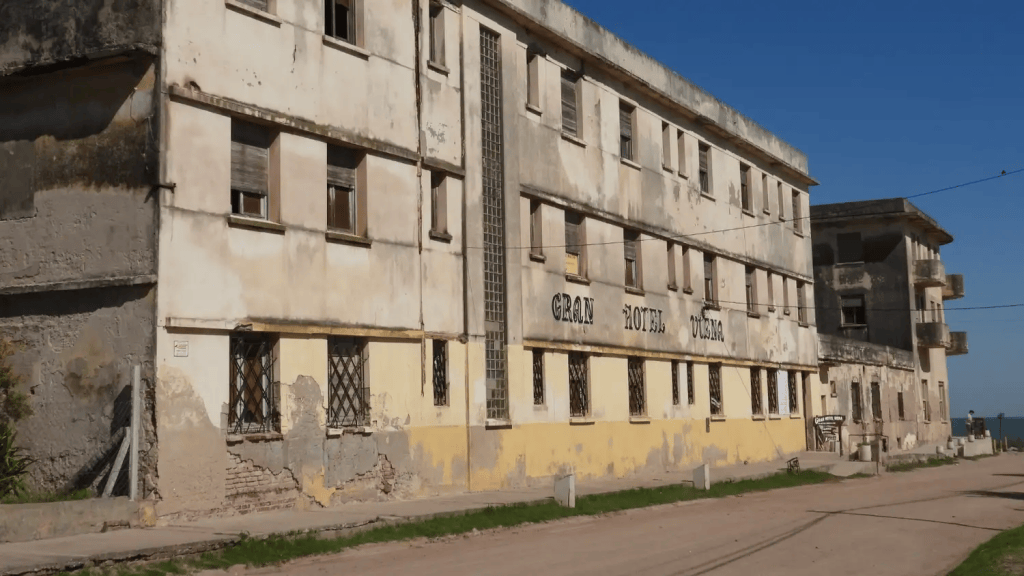
Tras la sentencia de la Cámara de Apelaciones de San Francisco que ordena el desalojo inmediato de la Municipalidad, el titular de Wandorf Inversora S.A. desmiente los mitos nazis y proyecta una inversión hotelera de categoría internacional que promete mantener las visitas guiadas y el museo.
El destino del Gran Hotel Viena, el gigante de hormigón que custodia las costas de la laguna Mar Chiquita, ha dado un giro en la causa judicial. La Cámara de Apelaciones en lo Civil, Comercial y Contencioso Administrativo de la Quinta Circunscripción Judicial, con sede en San Francisco, revocó el fallo de primera instancia y ordenó a la Municipalidad de Miramar de Ansenuza restituir el inmueble a su legítima propietaria, Wandorf Inversora SA.
La decisión judicial prioriza el título de propiedad registrado por la empresa desde 1964 sobre lo que calificó como una “ocupación precaria” por parte del municipio. Aunque la sentencia no es definitiva, el pasado viernes el municipio presentó ante el Tribunal Superior de Justicia de Córdoba un recurso de casación, lo que significa que el proceso judicial todavía no finalizò.
Desde Buenos Aires en diálogo con LA VOZ DE SAN JUSTO, Máximo Pahlke, nieto del fundador y actual rostro detrás de la firma, define la sentencia de la Cámara de Apelaciones no como un fin, sino como el comienzo de una obsesión que lleva décadas gestándose: “A ver, tengo todo. Lo que no tengo es el bien, que es mío, donde he pagado impuestos, he pagado abogados. Es como una obsesión para mí”, afirma tajante.
El conflicto, que llegó a los tribunales en 2010 tras años de reclamos administrativos, tiene su origen en un comodato firmado a finales de los años 80. Según el relato de Pahlke, su padre, también llamado Máximo, cedió las instalaciones para que funcionaran escuelas en una Miramar devastada por la inundación. “Mi padre generosamente brinda las instalaciones del hotel para que funcionaran escuelas, ese tipo de cosas. Ahí es donde después se agarra que, bueno, se fue abandonado. Un disparate”, sostiene.
A pesar de que el intendente Gerardo Cicarelli anticipó que el municipio apeló mediante un recurso de Casación, el fallo de la Cámara es contundente: las tareas de mantenimiento y explotación turística realizadas por la comuna no bastaron para demostrar un “animus domini” (ánimo de dueño), sino que siempre se reconoció la titularidad ajena. Para el heredero de la dinastía alemana que levantó el edificio en los años 40, el maltrato ha sido la moneda corriente: “Me han maltratado muchísimo. Con este tema de los nazis, mis hijos los he tenido que cambiar de colegio”.
“Quiero hacer un proyecto, quiero hacer un hotel que reviva la historia de mi abuelo, que era un genio, con una visión extraordinaria. Quiero volver a hacer eso”, expresa Pahlke.
Un proyecto de bienestar: el Viena que viene
Ante el temor de la comunidad de ver cerrado el ícono que atrae a miles de turistas anualmente, Wandorf Inversora emitió un comunicado oficial reafirmando su compromiso de inversión. Pahlke es claro: no planea dejar una ruina. Su visión contempla un “centro de bienestar”, un hotel que aproveche las propiedades curativas de la laguna, tal como soñó su abuela Melita.
“No quiero ir a un hospital. No, no, no. Es un centro de bienestar. Exacto. Para disfrutar. Los atardeceres son maravillosos ahí. Es un lugar soñado. Y bueno, quiero que lo pueda disfrutar más gente, pero no una ruina”, explica con entusiasmo. El proyecto incluye spa y un espacio cultural, asegurando la continuidad del museo. Según trascendió, ya existen conversaciones avanzadas con una cadena hotelera internacional de origen local que está a la espera de que la posesión se concrete para desembarcar en Miramar.
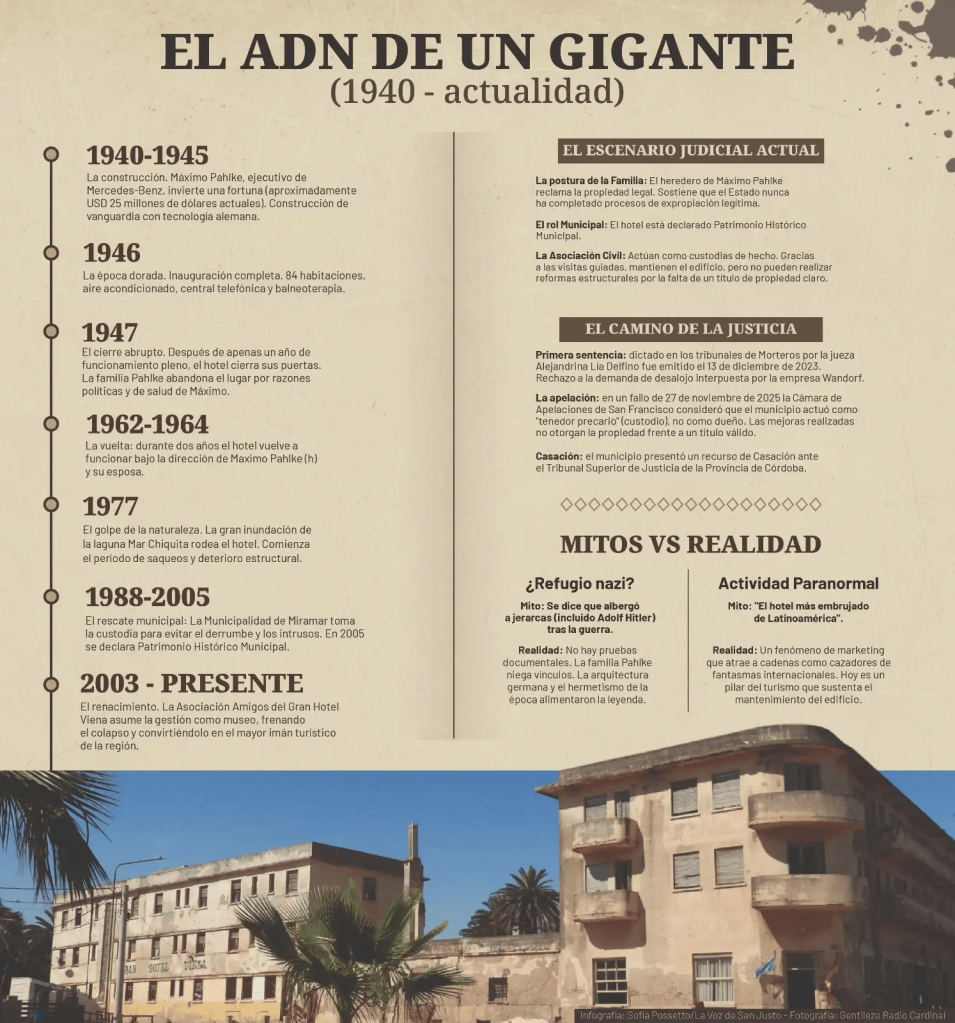
El fin de la leyenda nazi
Uno de los puntos donde Máximo Pahlke se muestra más vehemente es en desterrar la narrativa paranormal y, sobre todo, la supuesta vinculación nazi que ha rodeado al hotel. Califica la leyenda de “un disparate total”. Explica que su abuelo llegó a la Argentina en 1920, mucho antes del auge del Tercer Reich, y que su familia mantuvo una fuerte rivalidad con los Eichhorn de La Falda (propietarios del Hotel Edén y reconocidos simpatizantes de Hitler). “La familia Eichhorn del hotel de La Falda, ellos sí eran pro nazis. Mi abuelo estaba en contra”, relata, citando discusiones históricas entre ambas familias.
Sobre la mística del edificio, es igual de escéptico: “A ver, yo no creo en los fantasmas, no sé si hay ovnis”, y destaca que lo que quiere es “volver a traer a mi abuelo, no a los fantasmas”.
Puede interesarte
- La Justicia ordena desalojar el histórico Gran Hotel Viena: Municipalidad de Miramar pierde batalla judicial de 15 añosLa Región
Un mensaje para el futuro
A pesar de los 15 años de litigio, el tono de Pahlke busca un equilibrio. Asegura que el terreno no es inundable –lo que es replicado por las autoridades de Miramar- y que el edificio es estructuralmente recuperable pese al daño del salitre. Se muestra abierto al diálogo, siempre y cuando se respete su derecho.
“Que se queden tranquilos, que yo quiero poner el Hotel Viena otra vez en valor, quiero que funcione, no como una ruina. Quiero poner un hotel, un centro cultural, un museo”, señala el empresario como su principal argumento frente a la incertidumbre local.
El destino del Gran Hotel Viena entra ahora en una fase de definiciones legales y técnicas. Mientras el municipio agota las instancias de casación y la empresa Wandorf ratifica su intención de inversión, la comunidad de Miramar observa a la espera de una resolución final que determine quién gestionará, en definitiva, uno de los mayores emblemas históricos y turísticos del noreste provincial. El equilibrio entre el derecho a la propiedad privada y la función social del patrimonio sigue siendo el eje central de un litigio que aún tiene capítulos por escribir.
Wikipedia [Original in Spanisch] spricht im Zusammenhang dieses Hotels über eine mögliche:
„Verbindung zum Nationalsozialismus
Über die Verbindung des Grand Vienna Hotels mit dem Nationalsozialismus wurde viel spekuliert. Adolf Hitler ist vermutlich sogar Ehrengast des Hotels. Dies wird in dem Buch „After Hitler’s Steps“ von Abel Basti erwähnt, in dem der Autor seine Begegnung mit Olga Meyer erzählt, einer Frau aus Santa Fe, die mit einem Mann namens Müller verheiratet ist, mit dem sie nach Miramar reiste und wo sie behauptet, den Führer im Hotel gesehen zu haben. Der Nazi-Führer hatte ein exklusives Zimmer mit Bad sowie Geschirr und Laken zur Verfügung, die seine Initialen trugen. 9]
In dem Buch „Grey Wolf, Hitler’s Escape to Argentina“ von Simon Dunstan und Gerrard Williams[10] ]argumentiert er, dass der Führer nach den gesundheitlichen Komplikationen, die ihm durch die Stauffenberg-Bombe bereitet wurden, nach Wien ging
Darüber hinaus ist die Symbolik des Grand Vienna Hotels eng mit dem Nationalsozialismus verbunden: die Insignien seines Adlers (der der Schild der Stadt Wien ist), das Geschirr mit dem Hakenkreuz, das mit dem Fall des Nationalsozialismus verschwand, durch seine Konstruktion, die mit der Eugenik verbunden ist, mit dem Auftreten einer klinischen Rehabilitation und möglicher Zuflucht für Kriegsverbrecher. 12]
Jenseits der Mythen leugnen die Nachkommen von Maximo Pahlke derzeit die Verbindung seiner Familie zum Nationalsozialismus und befinden sich in einem Rechtsstreit über die Dominanz des Eigentums mit der Gemeinde Miramar. 6„
Auf Wikipedia genannte Quellen:
9) Basti, Abel (2014). In Hitlers Fußstapfen: Die Ultimative Untersuchung. ISBN 978-950-49-3787-6. OCLC 907662784. 907662784 Abgerufen am 11. August 2022.
10) Dustan, Simon (2012). GRAY WOLF: HITLERS LECK AN ARGENTINIEN. Distal. ISBN 9789875023208.
11) Clarin.com (10. Mai 2021). „Gran Hotel Vienna: Geister, eine opulente Vergangenheit und paranormale Aktivität.“ Clarin. Abgerufen am 11. August 2022. 12) Mannarino, Juan Manuel (15. Januar 2020). „Hitler in Cordoba?: Das Geheimnis des Grand Hotel Vienna, eine Ruine, die mit dem Mythos der Nazis und Geister fasziniert.“ infobae Abgerufen am 11. August 2022.
Im Briefwechsel des Eigentümers der Villa Pahlke in Bad Sachsa gibt Max Pahlke, mit Datum Buenos Aires, den 2. Mai 1947., dem hiesigen Verwalterehepaar Beyermann seine Sicht auf die vergangenen Jahre:
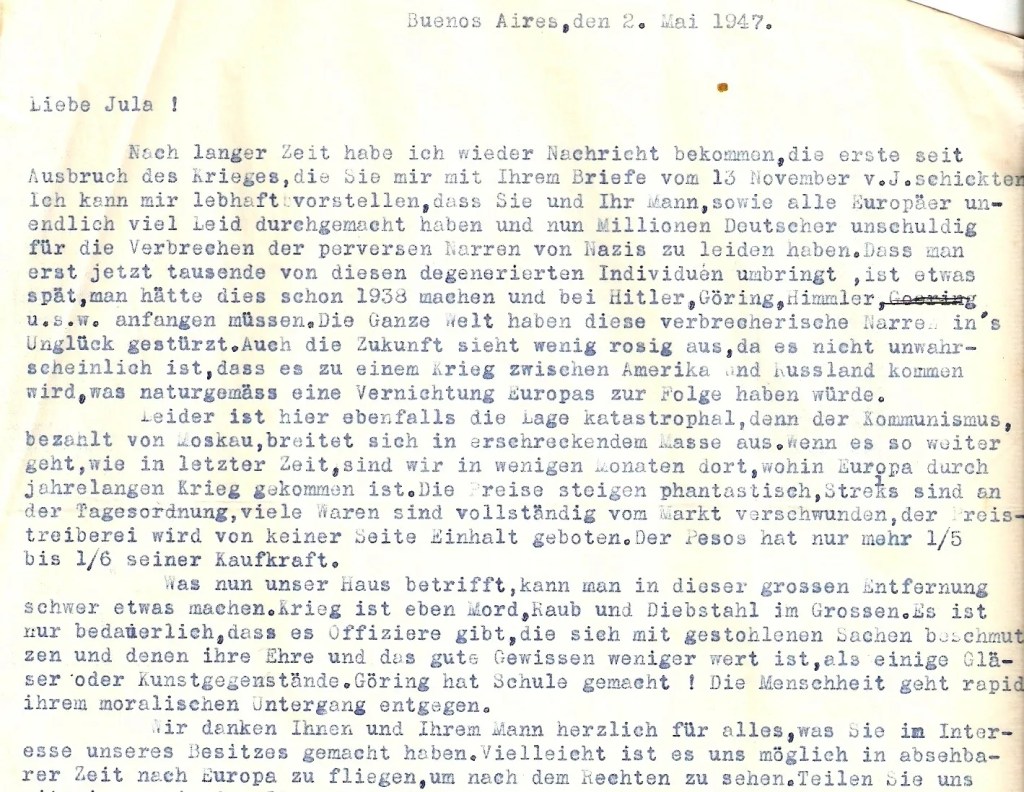
„…Ich kann mir lebhaft vorstellen, dass Sie und Ihr Mann, sowie alle Europäer unendlich viel Leid durchgemacht haben und nun Millionen Deutscher unschuldig für die Verbrechen der perversen Narren von Nazis zu leiden haben. Dass man erst jetzt tausende von diesen degenerierten Individuen umbringt, ist etwas spät, man hätte dies schon 1938 machen und bei Hitler, Göring, Himmler u.s.w. anfangen müssen. Die Ganze Welt haben diese verbrecherische Narren in`s Unglück gestürzt. Auch die Zukunft sieht wenig rosig aus, da es nicht unwahrscheinlich ist, dass es zu einem Krieg zwischen Amerika und Russland kommen wird, was naturgemäss eine Vernichtung Europas zur Folge haben würde.
Leider ist hier ebenfalls die Lage katastrophal, denn der Kommunismus, bezahlt von Moskau, breitet sich in erschreckendem Masse aus. Wenn es so weiter geht, wie in letzter Zeit, sind wir in wenigen Monaten dort, wohin Europa durch jahrelangen Krieg gekommen ist. Die Preise steigen phantastisch, Streiks sind an der Tagesordnung, viele Waren sind vollständig vom Markt verschwunden, der Preistreiberei wird von keiner Seite Einhalt geboten. Der Pesos hat nur mehr 1/5 bis 1/6 seiner Kaufkraft.
Was nun unser Haus betrifft, kann man in dieser grossen Entfernung schwer etwas machen. Krieg ist eben Mord, Raub und Diebstahl im Grossen. Es ist nur bedauerlich, dass es Offiziere gibt, die sich mit gestohlenen Sachen beschmutzen und denen ihre Ehre und das gute Gewissen weniger wert ist, als einige Gläser oder Kunstgegenstände. Göring hat Schule gemacht! Die Menschheit geht rapide ihrem moralischen Untergang entgegen…“
Max Pahlke und die wirtschaftlichen Verflechtungen der USA mit Nazi-Deutschland
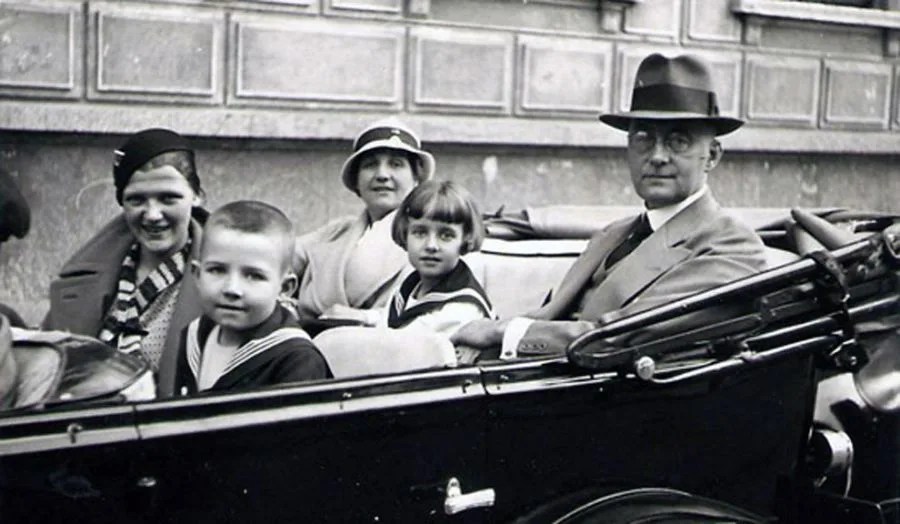
(Familie Pahlke, abgebildet unter https://noticias.perfil.com/noticias/costumbres/2013-09-18-adios-a-las-leyendas-del-gran-hotel-viena.phtml
Leider ist dort die Quelle nicht angegeben. Bitte um Benachrichtigung)
Als Diskussionsgrundlage zur weiteren Forschung zu der schillernden Figur des Max Pahlke siehe u.a.
„Das Mannesmann-Engagement in Brasilien von 1892-1995“
(Frank J. Nellißen, München, Beck, 1997, ISBN 3 406 43 19 33)
sowie
GREY WOLF THE ESCAPE OF ADOLF HITLER
…..THE “STAUFFENBERG BOMB” of July 20, 1944, had injured Hitler more extensively than the Nazi propaganda machine had made public. The deep cold of the Patagonian winter now contributed to his “rheumatism” and he suffered from inflamed joints and stiffness in his right hand, but more distressing was the fact that the surgeons had been unable to remove all the oak splinters that had sprayed from the table that saved his life. The constant pressure from an oak fragment lodged deep in the nasal bones between his eyes caused him acute neuralgic pain during the stay at Estancia San Ramón. Hitler needed surgery.
Since it was judged too much of a security risk for him to attend a hospital in Buenos Aires, he and Eva traveled north to the province of Córdoba and the Nazi hospital and health spa at the Gran Hotel Viena, at Miramar on the Mar Chiquita lake. The Gran Hotel Viena was built by an Abwehr agent, an early Nazi Party member named Max Pahlke, between 1943 and 1945—the same period as the construction of Villa Winter on Fuerteventura and the extension of the airfield at San Carlos de Bariloche. Pahlke, the capable manager of the Argentine branch of the German multinational Mannesmann, had acquired Argentine citizenship in the 1930s, Carlos de Bariloche. Pahlke, the capable manager of the Argentine branch of the German multinational Mannesmann, had acquired Argentine citizenship in the 1930s, but was well known to the Allies for his espionage work in South America.
The building contained eighty-four rooms, a medical facility staffed by doctors, nurses, and massage therapists, a large swimming pool, a library, and a dining room that seated two hundred. Every room had air conditioning and heating, granite floors, walls lined with imported Carrara marble, and bronze chandeliers. The facilities included a bank, a wine cellar, a food warehouse, a bakery, a slaughterhouse, an electricity generating plant, and garages with their own fuel supply. Of the seventy hotel employees, only twelve were locals from Miramar, all of whom worked outside the facility and had no contact with hotel guests. The remaining fifty-eight employees were either from Buenos Aires or from Germany, and all spoke German. In addition to a modern telephone system that connected guests with the rest of the world, the Gran Hotel Viena also had a tall telecommunications antenna on the seventy-foot-high water tower. This vantage point, and a further tower just down the coast, enabled watchful guards to spot any approach to the hotel by land, water, or air. The tiny market town of Miramar was a strange location for a huge, state-of-the-art hotel and spa complex, miles away from any major roads or other commercial routes. Pahlke, known for his business sense, had built Mannesmann Argentina into a massively profitable business. Pahlke supervised the opening of the hotel from December 1945 to March 1946; he then left.
A former German army colonel named Carl Martin Krueger, the Viena’s “chief of security,” was put in charge. An immaculate figure known locally as “The Engineer,” Krueger had arrived in Miramar in 1943. He did everything to make the Hitlers’ stay at the medical facility as comfortable as possible; they had an exclusive suite complete with AH-monogrammed blankets, sheets, towels, and dishes. With many local supporters, Hitler and his wife often took day-trips to Balnearia, a town some three miles from Mar Chiquita, to take tea. He had his photograph taken with other senior Nazis and would sign copies of Mein Kampf for well-wishers. One witness to these mundane encounters said that Hitler was often “lost in thought” and would say, “Now, I am far from here.” The Hitlers enjoyed their stay at the exclusive, luxurious waterside hotel. One of his bodyguards recalled that the couple would regularly walk along the shore, Hitler commenting on the wonderful sunsets. The operation to remove the splinters at first seemed to be successful, but the pain in Hitler’s face would return to plague him in later life….“
und außerdem:
„Ghost Stories Collection of stories about paranormal phenomena.
Gran Hotel Viena December 30, 2009
Ghost Hunters International is back on Jan. 6th with an all new investigation. This time the team heads to the Gran Hotel Viena in Miramar, Argentina. The history of this structure begins with a German named Max Pahlke in 1904. They traveled to Argentina in search of work. Max met and married an Austrian woman named Melita in Uruguay about ten years later. The couple had two children, Max Jr. and Ingrid.
His wife Melita suffered from bad asthma and his son Max dealt with psoriasis. Seeking relief from their ailments in Europe was rather dangerous due to World War II. Doctors suggested they visit Laguna de Mar Chiquita due to their curative baths and mud applications. The family took a trip to this location in 1938 and stayed a couple of weeks. They participated in healing treatments, balneotherapy, and mud therapy. After returning to Buenos Aires, that winter, Max noticed an improvement in his wife and son’s health.
Max was in good economic standing due to being the CEO of Mannesmann company and decided to invest in Miramar. Thus began constructing, done by a German company, the first of several stages of the 5-star luxurious Grand Hotel Vienna, named after his wife’s home country, in 1940. The hotel contained 84 rooms, a medical facility equipped with doctors, nurses and massage therapists, a library, bank, dining room that sits 200, granite floors, walls lined with Carrara marble, bronze chandeliers, wine cellar, slaughterhouse, bakery, only hotel with air conditioning and heating system in each facility, a large pool divided in to saltwater and freshwater (that is if you didn’t want to visit the lagoon), electricity generating plant, garages with their own fuel supply and food warehouse. It was completed in December 1945.
Argentina declared war on Germany 10 days before it surrendered. Because of the victory, Max was asked to leave his position in the Mannesmann Company. This along with several cases of abuse associated by the employees of the hotel forced Max to close down the hotel and move his family in March of 1946.
After Pahlke’s departure, the hotel continued to be under his ownership. Max Jr. continued treatments there until 1963 when his parents mutually agreed to reopen the hotel. Max Jr. or Dr. Pahlke refurbished and added on to the hotel with Dr. Koloman Kolomi Geraldini as service and administration manager. It remained opened that is until the mid 1980s after a series of floods damaged the Grand Hotel Vienna along with other parts of the village. Since then, the waters have receded, exposing the hotel and other buildings that weren’t demolished before the flood. The Pahlke family are currently in the legal process of reclaiming the hotel.
It is allegedly haunted by flood victims, and a former caregiver.”
(2021-05-06: http://paranormalstories.blogspot.com/2009/12/grand-hotel-vienna.html)
Vergleiche auch folgende Quelle:
https://www.infobae.com/sociedad/2020/03/07/el-gran-hotel-viena-y-el-mito-de-los-nazis-se-usa-lo-de-hitler-para-atraer-a-los-turistas/
Zu Max Pahlke und der Dynamit A.G. in Bad Sachsa vergleiche bitte auch folgende Veröffentlichung:
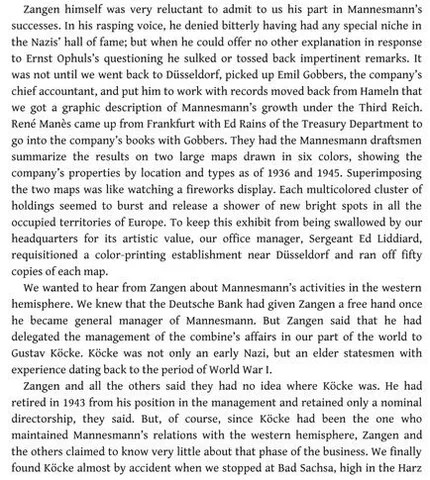
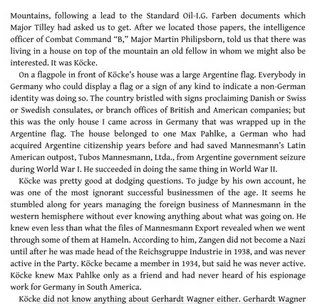
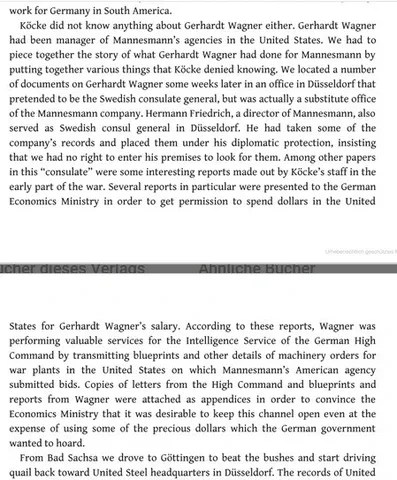
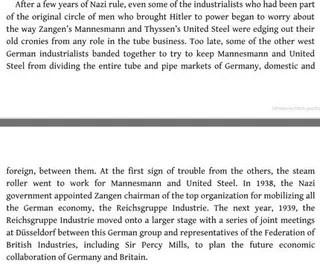
All Honorable Men: The Story of the Men on Both Sides of the Atlantic Who Successfully Thwarted Plans to Dismantle the Nazi Cartel System (Forbidden Bookshelf Book 21)
by James Stewart Martin, Mark Crispine Miller (Editor), Hang Albarelli (Foreord), Christopher Simpson (Introduction)
Hier ansonsten 5 kleine Ausschnitte aus
ISBN: 978-1-5040-3490-6.
https://www.goodreads.com/book/show/29980283-all-honorable-men.